Introduction
Choosing a haircut based on face shape helps create balance between hair and facial structure. When the haircut aligns with the proportions of the face, grooming becomes easier and the overall appearance looks organized. Many people select haircuts based on trend or preference without evaluating how the cut interacts with their facial outline. Understanding face shape provides a reliable starting point for selecting a haircut that works over time.
This guide explains how to identify your face shape, which haircut structures support each shape, what to avoid, how hair texture affects the outcome, and how to communicate clearly with a stylist. The goal is to help you choose a haircut that fits your daily routine while maintaining proportion.
Why Face Shape Matters in Haircut Selection
A haircut changes how others perceive the length and width of the face. Hair can add height, reduce bulk, guide attention, or soften lines depending on how it is cut.
Benefits of Choosing a Haircut Based on Face Shape
- Creates visual balance
- Supports natural proportions
- Reduces styling difficulty
- Helps hair grow evenly
- Improves long-term manageability
When hair and face structure work together, maintenance often becomes simpler.
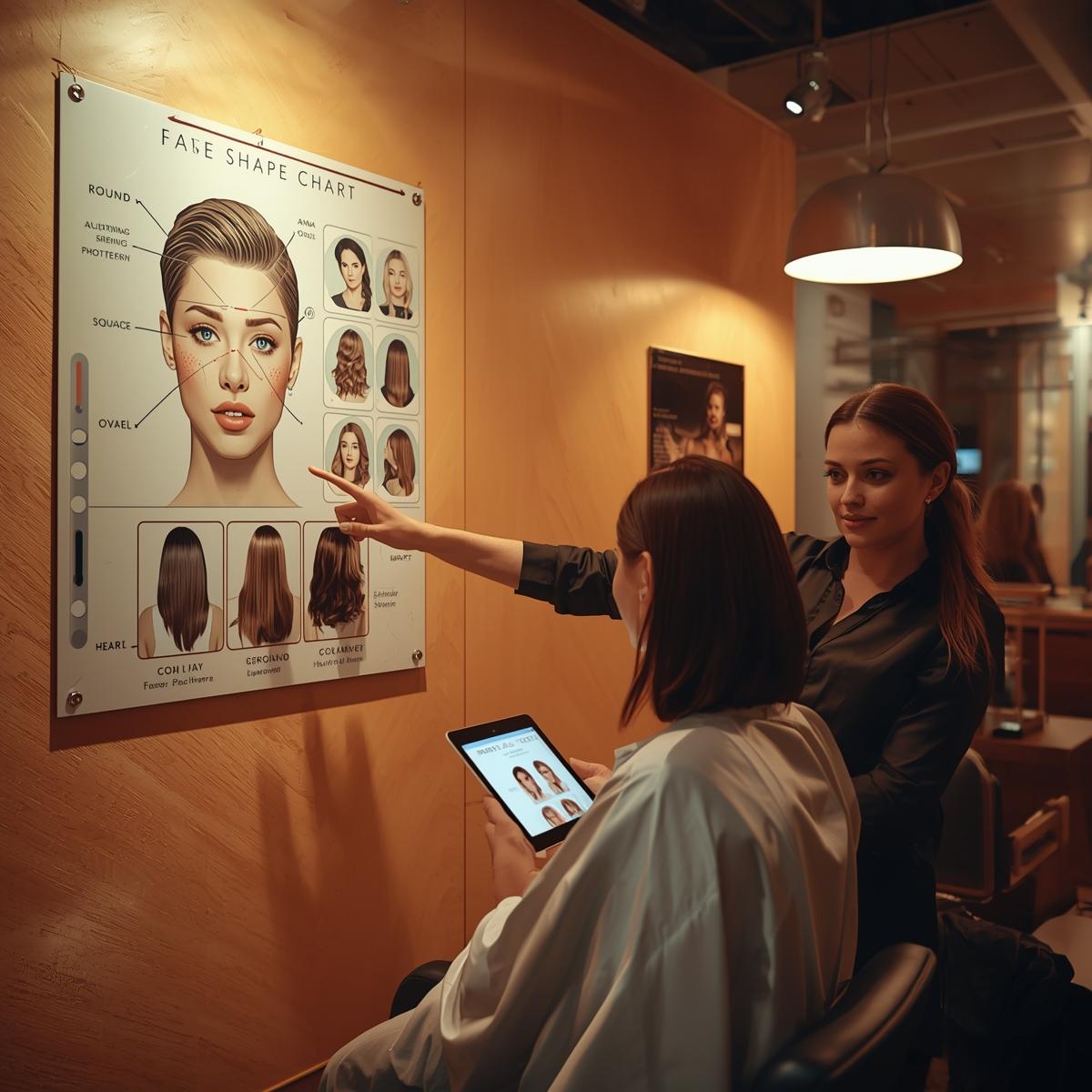
How to Identify Your Face Shape
Before selecting a haircut, determine the structure of your face.
Steps to Measure
- Stand in front of a mirror.
- Pull hair away from your face.
- Observe the width of your forehead.
- Look at your cheekbone width.
- Examine the jawline.
- Compare face length to width.
You may also trace your reflection using a washable marker to see the outline more clearly.
Main Face Shapes
Most people fall into one of these categories:
- Oval
- Round
- Square
- Rectangle (also called oblong)
- Heart
- Diamond
- Triangle
Each shape benefits from a different haircut strategy.
Haircuts for Oval Face Shape
Characteristics
- Face length is greater than width.
- Forehead is slightly wider than the jaw.
- Proportions appear balanced.
Haircut Goal
Maintain balance without extending the face.
Recommended Haircuts
- Bob
- Lob
- Long layers
- Pixie
- Shoulder-length cuts
- Soft layered styles
Because the proportions are already balanced, many haircuts align well with this shape.
What to Avoid
- Excess height at the crown
- Very long hair without layers
These can make the face appear longer.
Haircuts for Round Face Shape
Characteristics
- Width and length are similar.
- Jawline appears less angular.
- Cheeks often form the widest point.
Haircut Goal
Create the impression of length and reduce width.
Recommended Haircuts
- Long layers
- Cuts that fall below the chin
- Pixie with height on top
- Angled bob
- Layered mid-length cuts
Hair that extends downward helps guide the eye vertically.
What to Avoid
- Chin-length blunt bobs
- Cuts with heavy volume on the sides
- Straight fringe that shortens the face
These emphasize width.
Haircuts for Square Face Shape
Characteristics
- Forehead, cheekbones, and jawline share similar width.
- Jawline appears defined.
Haircut Goal
Guide hair along the facial outline rather than reinforcing strong lines.
Recommended Haircuts
- Layered cuts
- Shoulder-length styles
- Textured bobs
- Long waves
- Side-parted styles
These direct attention across the face rather than straight outward.
What to Avoid
- Single-length blunt cuts at the jaw
- Sharp perimeter lines
Such cuts mirror the angles of the face.
Haircuts for Rectangle Face Shape
Characteristics
- Face appears longer than it is wide.
- Cheeks, forehead, and jaw share similar width.
Haircut Goal
Reduce the sense of vertical length.
Recommended Haircuts
- Shoulder-length cuts
- Layered styles
- Bob with fringe
- Shag
- Medium-length waves
Haircuts that create horizontal focus help balance the face.
What to Avoid
- Very long hair without shaping
- Height at the crown
These extend the face further.
Haircuts for Heart Face Shape
Characteristics
- Forehead appears wider than the jaw.
- Chin narrows.
Haircut Goal
Add presence near the lower portion of the face.
Recommended Haircuts
- Chin-length bob
- Lob
- Layered cuts that begin below the chin
- Waves that build density near the lower half
These help distribute visual weight.
What to Avoid
- Very short cuts with tight sides
- Excess volume at the top
These increase upper width.
Haircuts for Diamond Face Shape
Characteristics
- Cheekbones form the widest point.
- Forehead and jaw appear narrower.
Haircut Goal
Reduce emphasis on cheek width while supporting the upper and lower areas.
Recommended Haircuts
- Shoulder-length layers
- Side-parted styles
- Textured lob
- Cuts with movement near the forehead
These guide attention upward and downward rather than toward the cheeks.
What to Avoid
- Cuts that remove too much hair from the sides
- Very short styles exposing cheekbones
Balance is key.
Haircuts for Triangle Face Shape
Characteristics
- Jawline is wider than the forehead.
Haircut Goal
Create presence near the upper portion of the face.
Recommended Haircuts
- Layered styles starting near the temples
- Shoulder-length cuts
- Waves
- Pixie with length on top
These support the upper area.
What to Avoid
- Chin-length cuts that widen the jaw
- Heavy density at the bottom
These increase lower width.
The Role of Hair Texture
Face shape alone does not determine the outcome. Hair texture influences how a haircut settles.
Straight Hair
Shows lines clearly, making structured cuts more noticeable.
Wavy Hair
Adds natural movement that can soften transitions.
Curly Hair
Requires shaping to prevent uneven expansion.
Coily Hair
Needs length planning because shrinkage affects how the cut appears.
Discuss texture with your stylist so they can adjust cutting techniques.
Hair Density and Weight Distribution
Density refers to how much hair you have rather than the pattern.
Thick Hair
May require removal of weight to maintain balance.
Helpful structures:
- Layers
- Texturing
- Shag-style cuts
Fine Hair
Often benefits from maintaining stronger perimeter lines.
Helpful structures:
- Blunt cuts
- Minimal layering
- Structured bobs
Matching density with structure improves manageability.
Consider Your Lifestyle
A haircut should support your routine rather than complicate it.
Ask yourself:
- How much time do I spend styling?
- Can I visit a salon regularly?
- Do I prefer simple grooming?
- Do workplace expectations affect my choice?
Selecting a haircut that fits your schedule increases long-term satisfaction.
Short vs Medium vs Long Hair and Face Shape
Short Hair
Draws attention toward facial features. Precision becomes more important.
Medium Hair
Offers flexibility and often suits many face shapes.
Long Hair
Guides the eye downward and can help balance width.
Choose length based on comfort and maintenance ability.
How to Communicate With Your Stylist
Clear communication helps translate your goal into a result.
What to Explain
- Your face shape
- Desired length
- Daily routine
- Styling habits
- Maintenance expectations
Example Request
“I want a haircut that balances my face shape and remains easy to manage.”
Bringing reference images can improve clarity.
Importance of Maintenance
Even the right haircut needs upkeep.
General Trim Guide
- Short cuts: every 4 to 6 weeks
- Medium cuts: every 6 to 8 weeks
- Long cuts: every 8 to 12 weeks
Scheduling trims prevents the shape from disappearing.
Common Mistakes to Avoid
- Choosing a haircut based only on trend
- Ignoring face proportions
- Selecting a style that requires more maintenance than expected
- Skipping consultations
- Using excessive product
Awareness supports better outcomes.
Can You Combine Face Shape Rules?
Yes. Many people have features that overlap categories. A stylist can blend techniques to create balance across multiple areas.
Haircut guidelines are not strict rules but structural references.
Seasonal Considerations
Climate can influence haircut comfort.
- Shorter hair may feel easier during warm periods.
- Longer lengths can provide coverage in cooler conditions.
Adjust gradually rather than making sudden changes.
Signs You Chose the Right Haircut
- Hair falls naturally without constant adjustment
- Styling takes little time
- Growth remains balanced
- The cut supports your facial outline
- Maintenance feels manageable
When these signs appear, the haircut aligns with your structure.
Long-Term Strategy for Haircut Success
Selecting the right haircut is only the first step. Consistency ensures lasting results.
Steps for Success
- Understand your face shape.
- Choose a structure that supports it.
- Work with a stylist you trust.
- Maintain a trim schedule.
- Adjust gradually when changing styles.
A steady approach prevents unnecessary frustration.
Conclusion
Picking a haircut based on face shape provides a practical method for achieving balance and manageability. By identifying your face structure and selecting a haircut that supports it, you improve how the hair grows, falls, and responds to daily care.
Face shape, hair texture, density, lifestyle, and maintenance expectations all influence the final result. Clear communication with your stylist ensures that your haircut aligns with your needs rather than working against them.
The right haircut should feel natural, remain manageable between visits, and support your routine. When structure and proportion guide your decision, grooming becomes simpler and more predictable over time.